In the fast-evolving channel marketing landscape, AI is no longer a future trend—it’s actively reshaping how vendors engage partners, streamline operations, and drive revenue. If you’re a channel leader wondering how to integrate AI into your partner programs, start with these clear, actionable insights: 1) Use AI for hyper-personalized partner experiences to reduce friction and increase engagement by up to 50%; 2) Leverage predictive analytics to identify churning partners and optimize tiered programs dynamically; 3) Implement agentic AI for automated deal registration and co-selling orchestration to accelerate revenue cycles; 4) Focus on purpose-built AI tools for demand generation, enabling partners to create customized content in minutes; 5) Measure ease of doing business through AI-driven insights, prioritizing self-service and on-demand enablement to attract top partners. These strategies, drawn from industry experts, can help you stay competitive—read on for in-depth takeaways from Baptie & Co.’s recent webinar.
Introduction: The AI Revolution in Partner Ecosystems
The channel marketing industry is at a pivotal moment. With AI transforming everything from partner enablement to revenue attribution, vendors must adapt or risk falling behind. In a recent Baptie & Co. webinar titled “How and Why AI is Rewriting Partner Engagement – Are We Ready for It?”, a panel of experts—James Hodgkinson from 360insights, Tom Bowles from ChannelScaler, Harbinder Khera from MindMatrix, and Steven Kellam from StructuredWeb—delved into real-world AI applications. Hosted by Rod Baptie, the discussion highlighted how AI is making partner interactions easier, more personalized, and revenue-focused.
The webinar, a preview for the upcoming PartnerTechX event (March 16-18, 2026), emphasized that partner tech is now a key factor in vendors’ selection by partners. With attention spans short and complexity high, AI offers a way to simplify processes and deliver value. Let’s break down the key takeaways, including live demos and forward-looking advice.
Ease of Doing Business: The New Competitive Edge
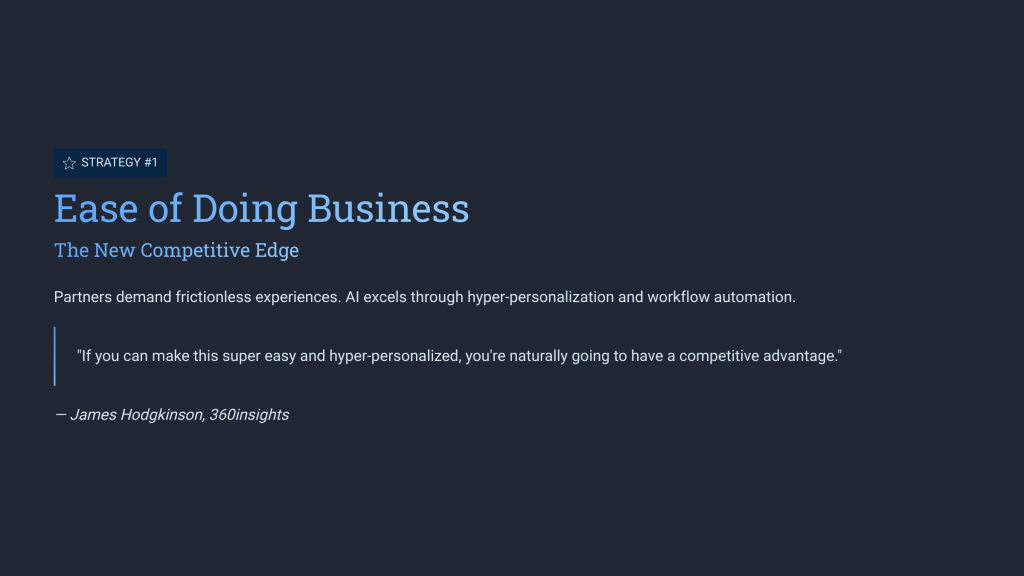
James Hodgkinson, Senior Vice President of Ecosystem at 360insights, kicked off by stressing that ease of doing business is paramount in today’s attention-deficit world. Partners don’t have time for cumbersome software or manual tasks like deal registrations. AI excels here by hyper-personalizing experiences and automating complex workflows.
For instance, Hodgkinson explained how AI can handle variables in channel environments, giving vendors a competitive advantage in attracting and retaining partners. “If you can make this super easy and hyper-personalized, you’re naturally going to have a competitive advantage,” he said. Actionable tip: Audit your partner portal for friction points and integrate AI chat interfaces to allow natural language queries, reducing training needs and boosting adoption.
Tom Bowles, Strategic Account Director at ChannelScaler, built on this by discussing maturity scales in partner programs. For smaller programs with 50 partners, AI helps PAMs (Partner Account Managers) shift from admin roles to strategic ones. In larger ecosystems, it enables self-service, where partners access information without combing through documentation.
Bowles highlighted tuning AI chatbots for contextual relevance: “Serving the right information to the right people at the right time seems like magic.” Vendors should start by focusing on frontline support, feeding PAMs real-time data during engagements to move partners up the engagement model.
AI-Driven Insights and Predictive Analytics for Partners
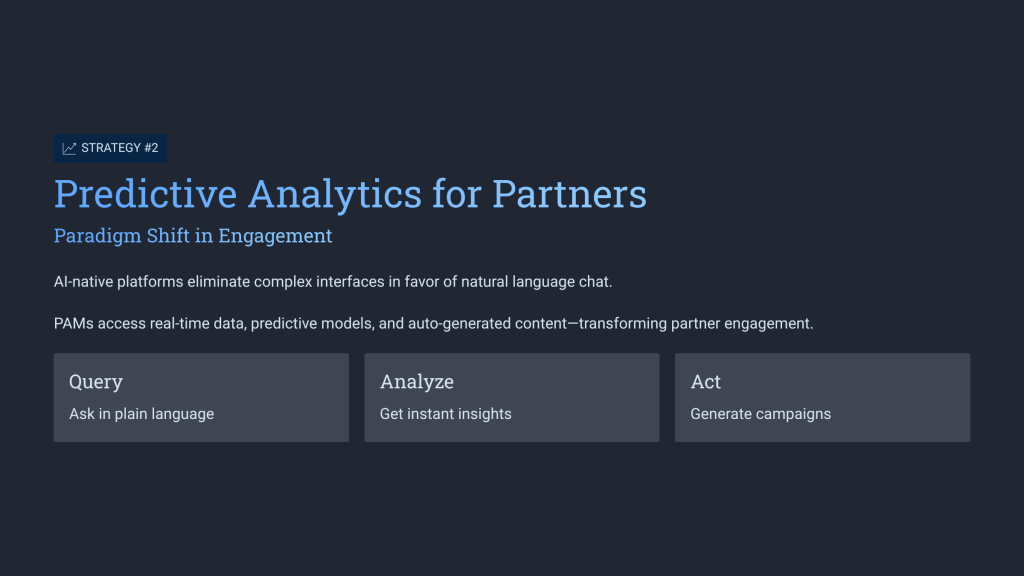
Harbinder Khera, Founder and CEO of MindMatrix, described AI as a paradigm shift, enabling natural language interactions that eliminate fancy screens in favor of chat interfaces. MindMatrix’s platform, AI-native and modular, supports end-to-end enablement without rip-and-replace.
Khera provided specifics on PAM empowerment: Using natural language, PAMs can query “Show partners who qualify for MDF funds” or “Project channel revenue in 2026.” This accesses real-time data, predictive analytics, and generative content for targeted emails. “AI transforms partner engagement with easy, on-demand access and hyper-personalization,” Khera noted.
Steven Kellam, Chief Revenue Officer at StructuredWeb, agreed that simplicity is table stakes but urged moving beyond it. Partners, often weak in marketing, need AI to ROI their time. “Tell them what to do and show them how,” Kellam advised. For example, AI can recommend campaigns based on historical data, buyer profiles, and MDF availability, providing real-time feedback on success.
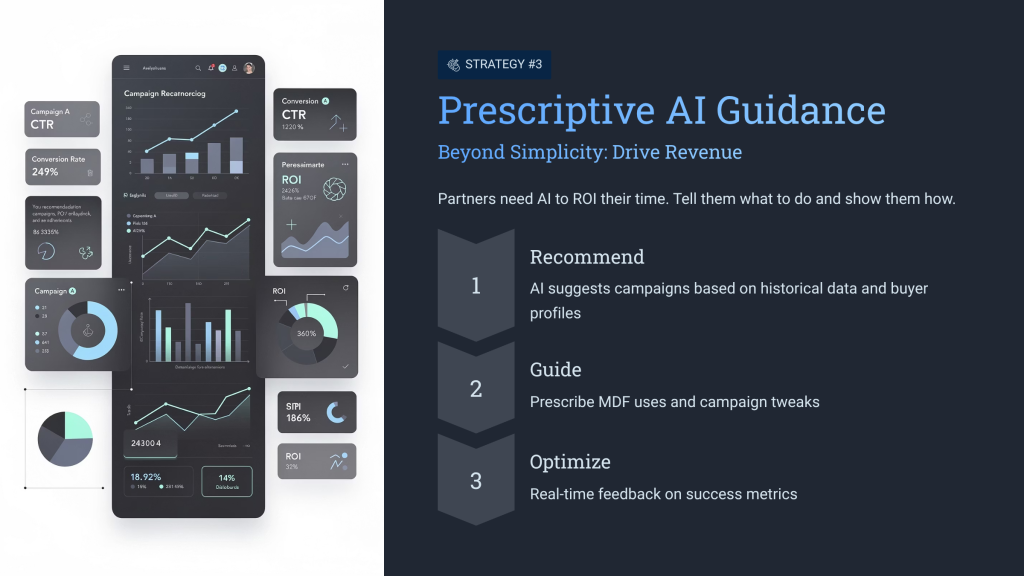
Key takeaway: Vendors should use AI for prescriptive guidance, like suggesting MDF uses or campaign tweaks, to drive demand and revenue. This shifts partners from passive users to active revenue generators.
Rethinking Tiered Programs in the AI Era
The panel addressed whether traditional tiered programs (bronze, silver, gold) are obsolete. Khera argued they’re not dead but need AI to become fluid and intelligent. By integrating dynamic data from CRMs, vendors can predict performance and gamify incentives, moving from rigid historical data to predictive models.
“Don’t make it 100% AI-driven yet—use it where predictability is controllable,” Khera cautioned. Start with semi-automation, blending CRM data for tier adjustments, then add AI predictions to incentivize high-potential partners.
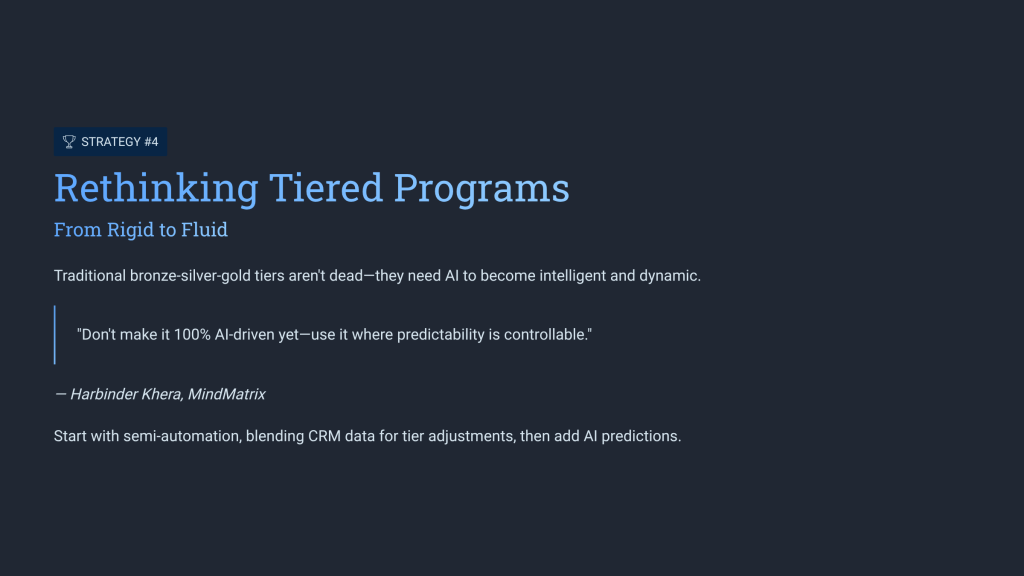
Kellam echoed this, suggesting rewards for AI adoption, like demand generation or campaign reporting. “Reward them for what you want them to do,” he said. Bowles added that AI enables “what-if” scenarios for program design, optimizing incentives without manual Excel macros.
Hodgkinson emphasized strategic upfront design: Link programs to business goals, viewing ecosystems holistically—including employees, influencers, and marketplaces. Challenges include data fragmentation, but composable solutions (integrating multiple techs) solve this.
Actionable insight: Run AI simulations on your tier structure to test changes, ensuring they align with partner unit economics and vendor KPIs.
Live Demos: AI in Action
The webinar featured demos showcasing practical AI implementations.
Hodgkinson demonstrated 360insights’ ecosystem orchestration with partners like StructuredWeb and MindMatrix. Using ServiceNow as a case, he showed multi-platform integration for co-selling: Connecting campaigns to business plans, account mapping (via Crossbeam), hyper-personalized assets (StructuredWeb), and MDF usage. AI wraps intelligence around this, recommending high-buy-likelihood customers via GTM Fabric.
Bowles showcased ChannelScaler’s AI for PAM optimization in deal registration. A chatbot (“Heat”) analyzes unstructured data from emails or CRMs, suggesting actions like approvals or escalations, speeding processes.
Khera demoed MindMatrix’s enablement tools: Hyper-personalized recommendations for courses and campaigns, “skills in seconds” via TikTok-style videos with auto-quizzes, and smart coaching for role-plays with performance evaluations. For PAMs, widgets create content on demand using knowledge sources for personalized campaigns.
Kellam illustrated StructuredWeb’s “just ask” model: Partners query for campaigns (e.g., “enterprise security”), get co-branded, hyper-personalized emails in minutes. AI continues the conversation, suggesting tweaks for industry or audience, then generates full campaigns.
These demos underscore AI’s role in reducing time from hours to minutes, fostering seamless vendor-partner collaboration.
Starting Points and Overcoming Challenges
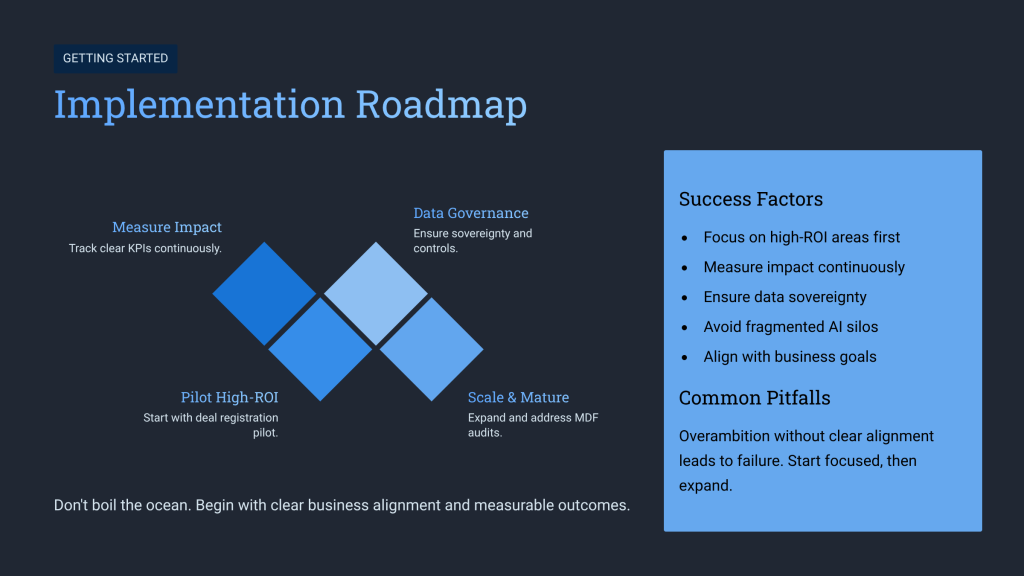
Panelists agreed: Don’t boil the ocean. Begin with high-ROI areas such as deal registration (Bowles), where AI accelerates approvals and claims processing. For mature programs, tackle scale-related issues such as MDF audits.
Kellam recommended conversational AI for content discovery and generation, especially for global localization. Hodgkinson stressed governance for data access, warning against fragmented AI silos.
Success factors include starting small, measuring impact, and ensuring data sovereignty. Failures often stem from overambition without clear business alignment.
The Future: Agentic AI and Ecosystem-Led Growth
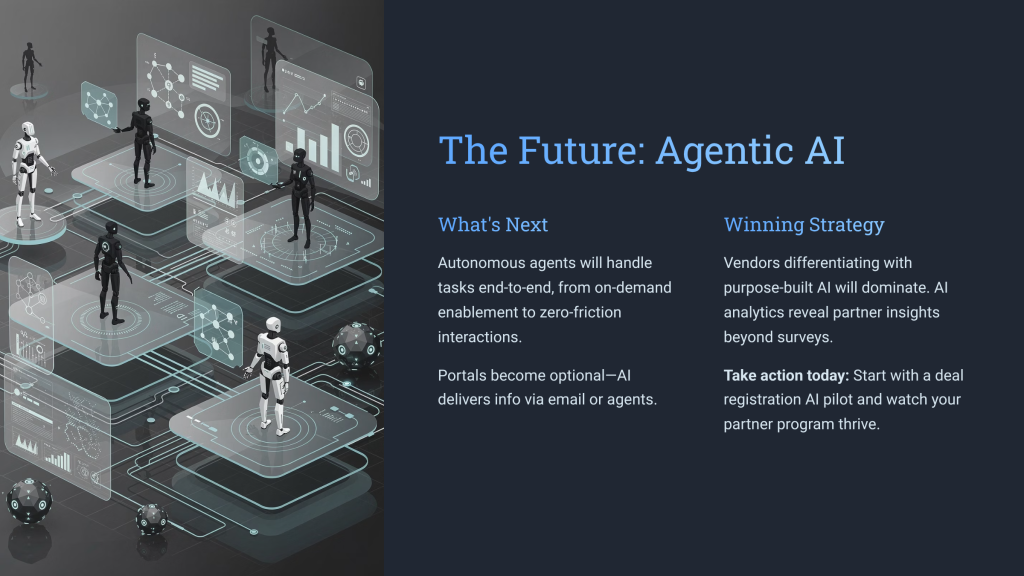
Looking ahead, the panel predicted that agentic AI—autonomous agents that handle tasks—would be transformative. From on-demand enablement (Netflix-like personalization) to zero-friction interactions, AI will make portals optional, delivering info via email or agents.
Vendors differentiating with purpose-built AI will win. As Kellam noted, AI analytics reveal partner thoughts beyond surveys, shaping better experiences.
For recruitment, AI savvy is rising on agendas. PartnerTechX offers hands-on learning—use code LOVEPTX26 for $100 off (expires soon).
In conclusion, AI isn’t just enhancing partner engagement; it’s rewriting the rules. By prioritizing ease, personalization, and measurable outcomes, vendors can build resilient ecosystems. Implement one strategy today—start with a deal reg AI pilot—and watch your partner program thrive.